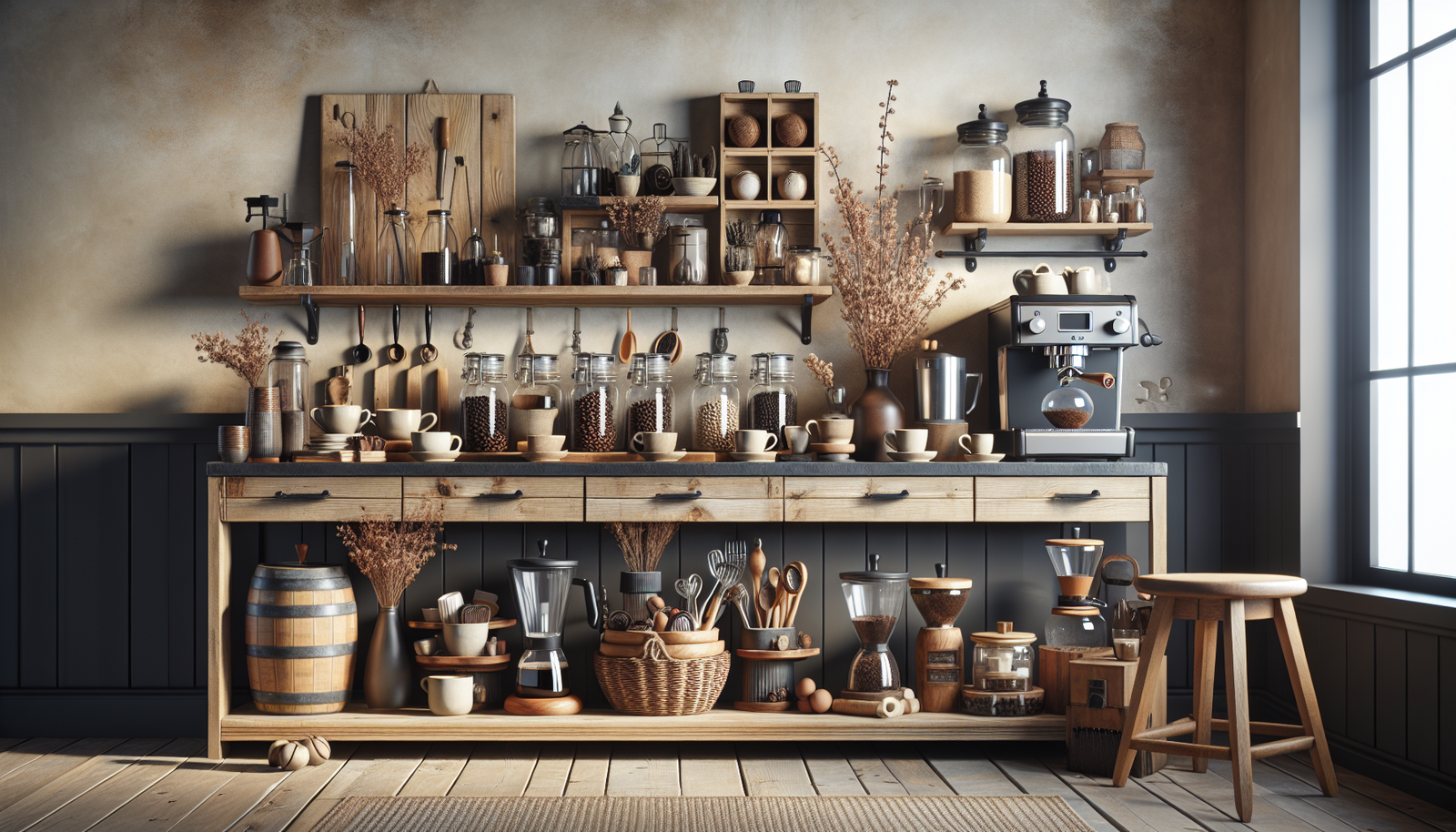
? Have you ever thought about how a single customized mug can change the look and feel of a room while also making your daily routine feel more personal?
Stylish Home Touches with Customized Mugs
Customized mugs are small, affordable accents that can carry big personality. You can use them to reinforce a color palette, tell a story, organize a space, or give as meaningful gifts. This article will help you understand materials, design methods, styling ideas, and practical tips so you can make the most of customized mugs in your home.
Why customized mugs matter in home styling
You may think of mugs as purely functional, but they also function as miniature artworks and organizational tools. A thoughtfully chosen mug can tie together a shelf vignette, complement textiles, or reflect a seasonal mood. Because mugs are relatively inexpensive and easy to swap, you can experiment with different styles to find what suits your home.
The emotional value of personalization
When you choose a customized mug, you inject personality and memory into everyday moments. Whether it’s a monogram, a quote, a photo, or an original illustration, personalization creates a small ritual that makes ordinary coffee or tea feel special. You’ll find yourself reaching for mugs that speak to you.
Types of mug customization methods
There are several ways to customize a mug, each with different aesthetics, durability, and cost. Understanding these methods helps you choose the right approach for your design and usage needs.
| Method | Look & Feel | Durability | Best for |
|---|---|---|---|
| Sublimation | Vivid, full-wrap color | Very durable if process done correctly; not suitable for all materials | Photos, complex color gradients, full-wrap designs |
| Screen printing | Solid colors, bold graphics | Durable; limited color layers | Large runs with simple designs |
| Pad printing | Precise small details | Durable on curved surfaces | Logos, small text |
| Laser engraving | Matte, etched look on coated or metal mugs | Extremely durable | Minimalist, permanent designs on stainless/enamel |
| Vinyl decals | Bright colors, layered textures | Moderate; handwash recommended | Small batches, DIY personalization |
| Heat transfer | Sharp detail, variable durability | Good if applied and sealed properly | Short runs, mixed media designs |
Choosing the right method for your needs
If you want full photographic wraps, sublimation is usually the best choice. For a rustic or engraved aesthetic on metal, laser engraving looks premium. Vinyl is great if you’re starting out or want to experiment at home.
This image is property of images.unsplash.com.
Mug materials and how they affect style and function
Material influences the weight, feel, temperature retention, and visual finish of a mug. Picking the right material is both a stylistic and practical decision.
| Material | Visual/style notes | Pros | Cons |
|---|---|---|---|
| Ceramic | Classic, versatile finishes | Affordable, good heat retention, wide print compatibility | Can chip or crack |
| Porcelain | Delicate, refined | Lightweight, elegant, translucent thinness possible | More fragile |
| Stoneware | Handmade, rustic | Thick, substantial feel, artisanal look | Heavier, sometimes less uniform |
| Glass | Modern, clean | Shows contents, visually light | Fragile, not ideal for hot drinks if thin |
| Stainless steel | Contemporary, durable | Great for travel, long-lasting | Requires coating for certain prints; can be pricey |
| Enamel | Vintage, camping vibe | Lightweight, retro charm | Not microwave-safe, can chip to reveal metal |
How material affects printing and finishing
Not all printing methods work on every material. Sublimation needs a polymer-coated surface, so it’s typically used on specially coated ceramic or metal. Laser engraving works well on stainless steel and some coated ceramics. Always confirm compatibility with your printer before finalizing designs.
Mug shapes, sizes, and handle styles
The shape of a mug contributes to function and aesthetic. You’ll want to match shape to use and the visual statement you intend.
- Standard cylindrical mugs work for everyday coffee and allow full-wrap designs.
- Wide-bowled latte mugs feel cozy and are great for layered drinks and hand-drawn designs.
- Tall travel mugs or insulated tumblers are practical and signal a modern, on-the-go lifestyle.
- C-shaped handles are ergonomic; D-shaped or loop handles may be more sculptural.
- Mugs without handles (e.g., Japanese-style yunomi) create a minimalist, tactile experience.
Consider how your design wraps around curves and where logos or monograms will sit when the mug is held.

This image is property of images.unsplash.com.
Styling ideas by room
You can use customized mugs throughout the home, not just in the kitchen. Here are room-by-room ideas to integrate mugs as purposeful decor.
Kitchen and coffee nook
The kitchen is the obvious home for mugs, and you can organize them to reinforce your kitchen’s color story. Group mugs by color, stack handle-to-handle, or hang them on a pegboard for both storage and display. Create a small coffee station with matching or intentionally mismatched mugs, a tray for syrups, and a few plants to soften the scene.
Living room and shelving
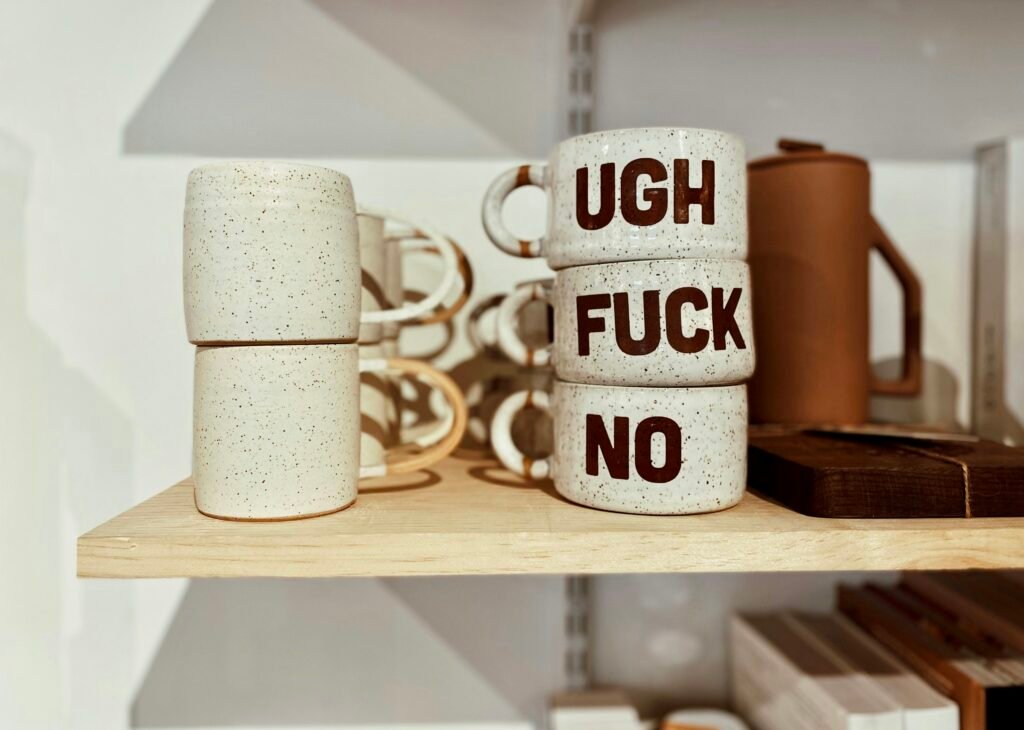
Place a curated mug on open shelves with books, ceramics, and framed photos. A single statement mug on a living room shelf can add charm without crowding. Mugs with sentimental or artistic designs work best here so the mug feels like art.
Home office
Customized mugs in the home office can carry motivational quotes, your name, or a brand logo. Use mugs as pen holders and pair them with a coordinating desk tray. A consistent color palette will help the workspace feel calm and intentional.
Dining room or breakfast nook
In a dining area, use matching custom mugs for family breakfast service or for entertaining. Personalized mugs assigned to family members bring a playful, organized touch to shared meals.
Bathroom and vanity
Small mugs make excellent vessels for toothbrushes, cotton swabs, or makeup brushes. Choose materials suited to moisture—glass or ceramic with coordinated design work well.
Color theory and pattern mixing
Your mug design should harmonize with your home palette. Use color theory to lift a room rather than clash with it.
- For neutral or minimalist interiors, introduce a single accent color through mug designs to bring warmth or contrast.
- If your room already has bold patterns, choose mugs with simple graphics or monochrome designs.
- For eclectic spaces, mix several patterns but repeat a unifying color to maintain coherence.
- Metallics like gold or copper on mugs can add luxurious accents to modern or rustic interiors.
Practical tips for mixing patterns
When combining mug patterns with other textiles, follow the “rule of three”: pick a dominant pattern, a secondary smaller-scale pattern, and a third that’s a neutral or textured option. This keeps visuals interesting without being overwhelming.

This image is property of images.unsplash.com.
Creative uses for customized mugs beyond drinking
Customized mugs can be versatile around the home if you think beyond beverage service.
- Planters: Small succulents or herbs look great in shallow mugs. Make sure to add drainage or a layer of pebbles.
- Candle vessels: Pour your own candles into ceramic mugs for unique gifts and decor items.
- Utensil holders: Use larger mugs to hold serving spoons or kitchen tools at the stove.
- Desk organizers: Pens, scissors, and small tools find a tidy home in a decorative mug.
- Bathroom storage: Store q-tips or lashes in matching mugs to bring continuity between rooms.
Safety and practical considerations
When repurposing mugs for plants or candles, be mindful of heat resistance, drainage, and whether the decoration will be damaged by soil or wax. If a mug is porous or unsealed, consider lining it to protect the design.
How to design a mug: step-by-step
Designing a mug is fun and approachable. Here’s a practical workflow to help you create something that prints well and looks professional.
- Clarify your concept: Decide whether you want a photo, text, pattern, or illustration. Think about mood and audience.
- Choose dimensions: Typical printable area for a standard 11 oz mug is around 8.5″ x 3.5″, but check vendor templates.
- Set up your file: Use high-resolution files (at least 300 DPI). Work in CMYK for printing accuracy if the vendor uses that color space.
- Add bleed: Extend backgrounds and elements slightly beyond the trim edges to avoid white margins.
- Outline fonts: Convert text to outlines or embed fonts to avoid substitution issues.
- Proof colors: Request a proof or sample if possible—colors can shift slightly in production.
- Save correct format: Save as high-quality PNG, TIFF, or PDF depending on vendor requirements.
Recommended file specs (generic guideline)
- Resolution: 300 DPI
- Color mode: CMYK or sRGB (follow vendor spec)
- Format: PNG with transparent background or print-ready PDF
- Dimensions: Vendor template-recommended size (e.g., 8.5″ x 3.5″ for 11 oz)
- Bleed: 0.125″–0.25″
Always ask the printer for their exact specifications.

Choosing a vendor and ordering tips
Deciding where to order customized mugs can affect price, quality, turnaround time, and sustainability.
- Local print shops often provide hands-on proofing and lower shipping emissions.
- Online POD (print-on-demand) services are convenient and ideal for one-offs.
- Specialty ceramic studios offer hand-glazed options with artisanal finishes but may be pricier.
- For large quantities, ask for production samples and bulk discounts.
Questions to ask before ordering
- Is the print method microwave- and dishwasher-safe?
- What’s the minimum order quantity?
- Can you get a sample or proof?
- What are the file format and color-profile requirements?
- How will mugs be packed and shipped?
Cost considerations and budget planning
Pricing varies based on material, printing method, quantity, and additional finishes like gold foil. Below is a simple budget guideline to help you estimate.
| Quantity | Typical per-unit cost (estimate) | Best strategy |
|---|---|---|
| 1–5 | $12–$30 | Use print-on-demand or local small-batch shops |
| 6–50 | $6–$15 | Small bulk order discounts start to apply |
| 51–200 | $4–$10 | Negotiable pricing; consider screen printing for logos |
| 200+ | $2.50–$8 | Factory runs and long lead times; best for events or resale |
Prices vary greatly by region and complexity of design. Factor in shipping, proofing, and possible returns for damaged goods.
Care, cleaning, and safety
How you care for customized mugs affects longevity of the print and material. Follow vendor guidelines first and adapt to your household habits.
| Action | When to use | Expected effect on mug |
|---|---|---|
| Dishwasher-safe washing | If vendor certifies | Most prints will last, but handwashing prolongs life |
| Handwashing with mild detergent | Always safe | Best for delicate finishes and metallic accents |
| Avoid microwave | If mug has metallic print or is enamel | Prevents sparking and damage |
| Remove stains (baking soda + water) | For coffee/tea stains | Gentle abrasive that’s usually safe for prints |
| Avoid harsh abrasives | Always | Protects surface and printed areas |
Microwave and dishwasher tips
Many sublimation prints and glazed ceramics are microwave- and dishwasher-safe, but metallic foils, laser engraved metals, and some enamel finishes are not. If you plan to use a mug daily and need machine dishwasher convenience, confirm the rating before buying.
Seasonal and event uses
Customized mugs make memorable event keepsakes and seasonal décor items.
- Weddings: Use personalized mugs as favors or place cards for guests.
- Holidays: Create limited-run holiday designs to rotate annually.
- Corporate events: Branded mugs are practical promotional items that people will use.
- Birthdays and milestones: Personalized dates, messages, or photos make lasting gifts.
Tips for event ordering
Order extras for unexpected guests or production defects. If you’re printing for an event, allow a buffer in production time in case proofs require changes. Consider packaging that’s protective and on-brand.
Sustainable and ethical considerations
If sustainability matters to you, look for eco-friendly options in materials and production.
- Choose locally-made mugs to reduce shipping emissions.
- Seek vendors who use non-toxic inks and recyclable packaging.
- Consider durable materials like high-quality ceramic or stainless steel to reduce waste.
- Reuse or repurpose old mugs (e.g., as planters) rather than discarding them.
Certifications and supplier vetting
Ask suppliers about their environmental practices, material sources, and packaging. Certifications such as OEKO-TEX (for textiles) or other print-related eco labels can be a helpful signal.
DIY mug customization techniques
If you prefer hands-on projects, several DIY methods let you create customized mugs at home.
- Permanent marker art: Use oil-based paint markers and bake the mug in an oven to cure (follow marker instructions).
- Sharpie art: Create patterns or lettering then cure in the oven; results vary and are best for decorative mugs.
- Vinyl decals: Cut designs with a craft cutter and apply to mugs; seal with a dishwasher-safe sealant if desired.
- Acrylic paint and sealant: Paint and then apply a dishwasher-safe sealing coat; ideal for hand-painted looks.
- Sublimation at home: Requires a sublimation printer, coated mugs, and a heat press or oven setup designed for sublimation.
Safety and durability for DIY
Handmade designs may not withstand heavy dishwasher cycles unless properly sealed. Avoid microwaving DIY mugs that contain metallic paints or decals. When gifting, inform recipients of care instructions.
Photo and typography tips for mug graphics
Design clarity matters on a small cylindrical canvas. Here are practical tips for making your design readable and attractive.
- Use bold, simple typography for readability at a distance.
- Keep essential text within the “safe area” where it’s least distorted by curvature.
- High-contrast color combos (dark on light or light on dark) increase legibility.
- Avoid very fine lines and tiny details that can blur in production.
- When using photos, pick strong focal points and crop to retain important elements.
Mockups and proofs
Use mockups to visualize how the design wraps around the mug. Request a physical proof when colors and precise alignment matter, especially for photographic work.
Packaging ideas for gifting or selling
Good packaging protects your mug and enhances presentation, especially if you’re selling or gifting.
- Use recycled kraft boxes with custom tissue paper for an eco-friendly look.
- Add a foam insert or crinkle paper to protect the mug during shipping.
- Include a care card that explains washing and microwave guidelines.
- For event favors, tie a ribbon and a small tag with the person’s name or message.
Branding and presentation
If you’re selling mugs, consistent branding across packaging, tags, and inserts builds trust and creates a memorable unboxing experience. Small touches like stickers or a handwritten note go a long way.
Selling customized mugs: quick business checklist
If you want to turn mug design into income, take a few practical steps to prepare.
- Source reliable suppliers or learn the print processes needed.
- Establish packaging, shipping, and return policies.
- Price your mugs to account for material costs, labor, packaging, and overhead.
- Photograph products with consistent backgrounds and good lighting.
- Test market demand through pop-ups, local markets, or online promotional campaigns.
Pricing formula (simple)
- Material + Printing cost per unit
-
- Labor and packaging
-
- Overhead (marketing, rent, utilities)
-
- Desired profit margin This helps you set a realistic retail price and know your break-even point.
Troubleshooting common issues
Even with planning, issues happen. Here are common problems and how to fix them.
- Color mismatch: Ask for a color proof and adjust color profiles.
- Printing misalignment: Request better registration or adjust template margins.
- Chips or cracks in shipping: Improve packaging or use more protective inserts.
- Faded prints after washing: Confirm printing method and recommended washing instructions; consider handwashing.
Returns and customer expectations
Be transparent about handmade variations and outline return policies clearly. When selling, provide clear photographs and accurate descriptions of size, material, and care.
Final styling and practical tips
- Start with a theme: Choose a color or motif and expand from there.
- Mix function and form: Combine mugs you use daily with decorative ones to keep styling practical.
- Rotate seasonally: Swap mug designs for holidays or seasonal color shifts to refresh your decor.
- Curate thoughtfully: Even in a casual home, a small collection of curated mugs looks intentional.
You can turn mugs into tiny ambassadors of your taste and habits. With careful design, the right materials, and thoughtful placement, customized mugs can elevate everyday moments and tie rooms together.
Conclusion
Customized mugs are versatile, accessible, and powerful styling tools that also serve daily needs. Whether you buy, order, or make them yourself, you can use mugs to express personality, create cohesive spaces, and craft meaningful gifts. Keep material, printing method, and care instructions in mind to ensure longevity, and don’t be afraid to experiment with creative uses beyond beverages. With a few thoughtful choices, your mug collection can become a signature element of your home.