
Have you ever imagined your morning coffee tasting better simply because the mug it sits in tells a story that belongs to you?
Creative Designs for Custom Print Coffee Mugs
This article walks you through creative design options, practical choices, and production know-how so you can create custom print coffee mugs that match your vision. You’ll find actionable tips, comparisons, and step-by-step guidance that make the whole process manageable and enjoyable.
Why custom print coffee mugs matter
Custom coffee mugs are tactile branding and gifting tools that deliver repeated impressions every time someone takes a sip. They combine function and personality, which means your design will be seen daily and remembered more easily than many digital ads.
Who uses custom mugs and why
Individuals order personalized mugs as gifts, keepsakes, or personal statements, while businesses use them for branding, promotional giveaways, and retail merchandise. Event planners and organizations rely on custom mugs to commemorate occasions and create a sense of belonging among attendees.
The emotional and practical impact of a well-designed mug
A thoughtful design can evoke nostalgia, humor, inspiration, or loyalty, turning an ordinary object into a conversation starter. Practical design choices—like readable text, durable printing, and comfortable handles—ensure the mug gets regular use and remains attractive for years.
Design styles and themes
Choosing a style helps you narrow design decisions and communicate clearly with printers or designers. Below are common styles that work well on mugs and what contexts they suit.
Minimalist designs
Minimalist designs use few elements, clean lines, and lots of white space so the focus stays on a simple message or icon. These are ideal for modern brands, professional gifts, and people who prefer subtlety.
Typographic designs
Typographic mugs place words, quotes, or single letters at the center of the design, using font styles to convey mood. Bold type can be playful or powerful, while scripts feel personal and handcrafted.
Illustrated and hand-drawn styles
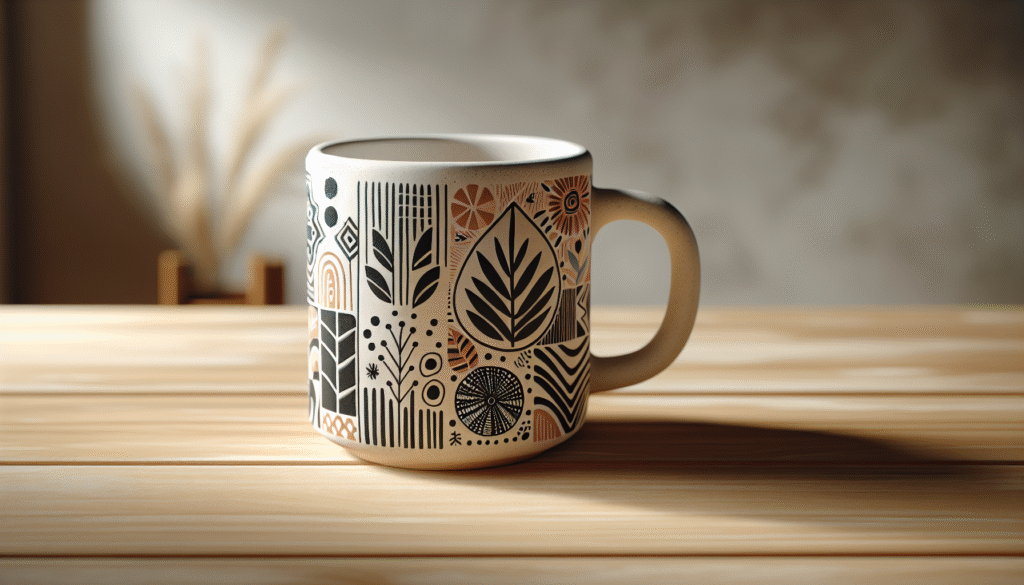
Hand-drawn elements give mugs a bespoke, artisanal feel that connects emotionally with users. Illustrations can be stylized portraits, whimsical characters, or botanical drawings depending on the intended vibe.
Photographic designs
Photographic printing reproduces images and memories with realism, making it perfect for family photos, pet portraits, or product images for retail. High-resolution files and careful color management are necessary for good results.
Pattern-based and repeat graphics
Patterns wrap the mug and make attractive visual textures that look great in sets or as part of an interior decor theme. Repeating motifs like geometrics, florals, or icons offer versatility for product lines.
Pop culture and fandom themes
Designs referencing movies, music, or memes resonate with niche audiences and make excellent merchandise. When using licensed content, make sure you have the rights to reproduce characters, logos, or quotes.
Seasonal and holiday themes
Limited-run seasonal mugs for holidays, celebrations, or local festivals create scarcity and increase perceived value. These designs can leverage color palettes and motifs tied to the event or season.
Interactive and novelty designs
Heat-sensitive ink (thermochromic) or reveal prints that change when hot liquid is added add fun and surprise to your mug. These special effects increase engagement and make gifts feel more surprising.
Script, calligraphy, and handwritten styles
Handwritten typography adds warmth and authenticity to messages, especially for wedding favors, personalized gifts, or small business branding. Scan high-quality handwriting to preserve the texture in print.
Collage and memory mugs
Collage-style mugs let you combine photos, text snippets, and small graphics to narrate a story or commemorate an event. These make meaningful gifts for anniversaries, reunions, and memorials.

This image is property of images.pexels.com.
Mug types and materials
Choosing the right substrate impacts the look, feel, durability, and price of a custom mug. The table below summarizes common material choices and their properties.
| Material | Typical finish | Pros | Cons | Best uses |
|---|---|---|---|---|
| Ceramic (glazed) | Gloss or matte | Classic look, good ink adhesion, affordable | Can chip, heavier | Everyday mugs, retail |
| Porcelain | Glossy, smooth | Elegant, thin walls, premium feel | More fragile, higher cost | High-end gifts, upscale cafes |
| Stoneware | Matte or textured | Rustic aesthetic, durable | Heavier, variable glaze | Artisan gifts, boutique shops |
| Stainless steel | Metal finish, insulated options | Durable, keeps drinks hot/cold | Printing options limited, metallic sheen | Travel mugs, outdoor use |
| Glass | Clear or colored | Modern, shows liquid, elegant | Fragile, printing adhesion challenges | Specialty designs, layered visuals |
| Enamel | Painted metal with enamel coating | Lightweight, retro look, durable | Limited print area, can chip | Camping mugs, themed gifts |
How material affects print choice
Different materials require different printing techniques and preparation steps, such as pre-treatment on stainless steel or special coating for glass. Your printer should advise which fabrics and inks work for the substrate you choose.
Shape and handle variations
Mugs come in standard, tall, conical, latte, and travel shapes, each influencing the print layout and user experience. Consider ergonomics and intended use when selecting shape and handle size.
Capacity and sizing considerations
Common sizes include 11 oz, 15 oz, and travel mug volumes; choose the size that matches the target audience and design scale. Remember that larger mugs offer more design real estate but may cost more and change visual balance.
Printing and finishing methods
The printing method you choose affects color fidelity, durability, texture, and cost. The table below compares popular methods to help you choose.
| Method | How it works | Color quality | Durability | Cost per unit | Best for |
|---|---|---|---|---|---|
| Dye-sublimation | Ink turns to gas and bonds with coated surfaces | Excellent, full-wrap | High, dishwasher-safe on coated items | Moderate | Full-color photos on coated ceramic |
| Screen printing | Ink forced through stencil screens | Strong, solid colors | Very durable | Low for large runs, higher for small runs | Simple 1–4 color logos |
| Pad printing | Silicone pad transfers ink to curved surfaces | Good for small details | Durable | Low to moderate | Small logos and small print areas |
| Direct-to-garment style ceramic print | Digital inkjet adapted for ceramics | Good for complex art | Moderate | Moderate | Short-run full-color prints |
| Laser engraving | Removes top layer for engraved effect | N/A (etched look) | Extremely durable | Moderate | Stainless steel, metal mugs |
| Heat transfer | Printed vinyl or transfer applied and heated | Good for complex imagery | Moderate (edges may lift) | Low to moderate | Short runs, prototypes |
| Hydro-dipping | Ink films float on water, wrapped to object | Varied, artistic | Moderate | Higher | Unique patterns and full-cover designs |
| UV printing | UV-cured inks printed directly | Bright, crisp | Good | Moderate | Small runs, quick turnarounds |
When to pick dye-sublimation
Use dye-sublimation for photo-quality, full-wrap designs on polyester-coated or specially coated ceramic mugs. It delivers seamless color transitions and photographic detail.
When to pick screen printing
Choose screen printing for logo-driven designs with limited colors and large production runs, because the per-unit cost drops significantly as quantity increases. It also yields long-lasting, opaque colors on ceramic glazes.
Finishes and special coatings
You can add textures, metallic foils, matte or gloss varnishes, and scratch-resistant coatings to boost perceived value. Special finishes often increase cost and may change care instructions.
This image is property of images.pexels.com.
Color, contrast, and typography tips
Good color choices and typography ensure your message reads well at arm’s length and across different lighting conditions. Use contrast and scale to maintain legibility.
Color selection and ink behavior
Understand that printed colors may look different on screen and ceramic due to material and firing processes. Ask for printed proofs and consider Pantone matching if color accuracy is crucial.
Contrast and readability
High contrast between text and background increases readability; for instance, dark text on a light background or vice versa. Avoid placing thin, small fonts over busy photographic areas.
Typography hierarchy
Use one strong display font for the main message and a simple sans-serif for supporting text to maintain clarity. Keep decorative fonts large and sparing; they lose recognition at small sizes.
Font pairings that work on mugs
Pair a bold serif or script for headings with a clean geometric sans for body or supporting info to achieve balance. Test sizes—what looks good on screen may be too small on a mug’s curvature.
Design process: from idea to finished mug
A clear process keeps deadlines and quality under control when you’re creating custom mugs for personal use or commercial sale. Here’s a practical sequence to follow.
Concept and brief
Start with a simple brief that answers who the mug is for, the intended message, and the quantity you need. Clarity here reduces revisions and unexpected costs later.
Mood boards and reference images
Collect images, color swatches, and fonts that match your desired aesthetic so designers and printers understand your vision. This helps maintain consistency if you’re producing a product line.
Mockups and digital proofs
Request a digital mockup showing your design wrapped around the exact mug template you’ll use. Mockups reveal composition issues around handles and seam areas.
File preparation and technical specs
Prepare files in CMYK color mode at 300 DPI with bleed and safe margins according to the printer’s template. Provide vector artwork for logos and outline fonts to prevent substitution errors.
Sample production and approvals
Order a sample or pre-production proof before full production to verify color, placement, and overall quality. Approve only after checking the printed sample under similar lighting to intended use.
Bulk production and quality control
During large runs, verify color consistency, print registration, and glaze quality at intervals. Ask about their QC protocols and whether they provide batch photos or inspections.
Packaging and finishing touches
Decide on retail packaging, inserts, or gift-ready boxes that match the perceived value of your mugs. Consider branded boxes, tissue paper, and individual protective padding for shipping safety.

This image is property of images.pexels.com.
Personalization ideas
Personalization makes mugs feel special and often increases their perceived value. You can tailor designs to individuals, groups, or occasions.
Name and monogram mugs
Personal names or initials with stylized typography make simple yet meaningful gifts. Monograms work well for weddings, corporate gifting, and premium product lines.
Photo and memory mugs
Photos of pets, family members, or events create emotional keepsakes that recipients treasure. Use high-resolution images and check cropping so faces aren’t distorted by curves.
Inside-joke and quote mugs
Private jokes, catchphrases, or memorable quotes make the mug an inside token between friends or colleagues. Keep language and tone appropriate for the intended recipients.
Coordinates and map mugs
Coordinates or small maps mark meaningful locations—first date spots, hometowns, or travel highlights. These designs are minimalist and universally appealing.
Event and commemorative mugs
Class reunions, conferences, and milestone birthdays use mugs as mementos that attendees keep. Incorporate the date, event name, and a distinctive motif to create continuity.
Pet and portrait mugs
Custom pet portraits are in demand; stylized or realistic renderings both work well. Make sure photos are well-lit and high resolution for best reproduction.
Team and corporate mugs
Team mugs with individual names and roles boost morale and create cohesion in workplaces. They also work as thoughtful corporate gifts that circulate your brand.
Gift sets and bundle ideas
Curate sets that pair a mug with coffee, tea, or small accessories for a premium gifting experience. Bundles can justify higher price points and improve perceived value.
Branding and marketing with custom mugs
Mugs can be powerful brand touchpoints that customers use daily, helping brand recall and loyalty. Thoughtful distribution and design extend the life of promotional campaigns.
Using mugs for brand recognition
Include subtle logos, color palettes, and taglines on mugs to maintain brand cohesion without being intrusive. Repeat impressions from daily use build familiarity.
Merchandising and retail strategies
If you plan to sell mugs, consider limited editions, artist collaborations, and seasonal releases to encourage repeat purchases. Offer tiered pricing for single vs. bundle purchases.
Corporate gifting and promotional campaigns
Choose designs that align with your campaign goals—simple and bold for mass giveaways, premium and personalized for client gifts. Track impact by including discount codes or QR codes printed on the mug.
Event giveaways and swag management
Use mugs as premium swag at conferences and events where the item will be kept rather than discarded. Include business info in subtle locations or use packaging that conveys value.
| Marketing use | Design recommendations | Measurement ideas |
|---|---|---|
| Promotional giveaways | Bold logo, low-cost printing | Redemption codes on mugs |
| Retail merchandise | High-quality finishes, varied sizes | Sales velocity and reviews |
| Corporate gifts | Personalization, premium packaging | Client retention tracking |
| Events & reunions | Event dates, commemorative artwork | Social shares and testimonials |
Cost, pricing and minimums
Understanding cost drivers helps you optimize designs and quantities for budget and quality. Pricing varies by method, material, and volume.
Factors that affect price
Costs hinge on print method, number of colors, surface area, mug material, and quantity ordered. Special finishes, rush production, and custom packaging add to the price.
Typical price ranges
Small custom runs (under 50) can range from $8–$25 per mug depending on method and customization. Larger orders often drop to $3–$10 per mug for basic prints.
Minimum order quantities
Some printing methods require minimums—screen printing often has higher minimums, while digital or heat transfer methods suit single-piece orders. Ask suppliers for tiered pricing so you can plan.
Cost-saving strategies
Reduce costs by simplifying color palettes, choosing popular mug sizes, limiting special finishes, and ordering larger quantities for unit price reductions. Group orders with partners or pre-sell to offset upfront costs.
| Cost driver | Impact | Tips |
|---|---|---|
| Print method | High | Use digital for short runs, screen for large runs |
| Colors | Medium | Use fewer spot colors for savings |
| Quantity | High | Larger quantity = lower unit cost |
| Packaging | Variable | Use basic packaging for bulk, premium for gifts |
Sustainability and materials
Eco-conscious design and production make your mugs more attractive to environmentally aware consumers. Consider both materials and supply chain choices.
Recycled and low-impact materials
Choose recycled ceramic, post-consumer glass, or stainless steel with recycled content to reduce environmental footprint. Verify supplier claims with certifications or material data sheets.
Low-emission printing and local production
Selecting local manufacturers cuts shipping emissions and reduces lead times. Ask printers about VOC-free inks, water-based processes, and energy-efficient kilns.
Biodegradable and recyclable packaging
Use recyclable cardboard, compostable fills, and minimal plastic to reduce packaging waste. Clearly label packaging to inform customers how to recycle or compost materials.
Product longevity and reuse
Design mugs for durability so they stay in use longer, which is more sustainable than single-use items. Offer repair or replacement programs if feasible to extend product life.
| Sustainable choice | Benefit | Consideration |
|---|---|---|
| Recycled material | Lower resource use | May cost slightly more |
| Local sourcing | Lower transport footprint | Limited supplier options |
| Water-based inks | Lower VOCs | Compatibility depends on substrate |
Care, washing and durability
How you print and finish a mug affects how it should be cared for and how long it lasts. Provide clear care instructions to customers to extend the life of the product.
Dishwasher and microwave safety
Many dye-sublimation and glazed ceramic prints are dishwasher-safe, but special finishes and some metallic inks may not be. If unsure, recommend gentle handwashing to preserve finish.
Avoiding abrasion and chemical exposure
Abrasive scrubbers and strong detergents can fade or scratch prints; advise using soft sponges and mild detergents. Vinegar and bleach can damage coatings and should be avoided.
Storage and handling tips
Store mugs upright in a dry place and pack them carefully for shipping to avoid chipping. For retail, rotate stock to prevent long-term exposure to fluorescent lighting that can subtly fade colors.
Repair and replacement policies
Offer a reasonable replacement policy if manufacturing defects occur, and communicate what constitutes normal wear and tear. Clear policies improve customer trust and reduce disputes.
Common mistakes to avoid
Knowing typical pitfalls can save time and cost during your project. Avoid these common mistakes when ordering custom mugs.
Low-resolution artwork
Using low-res images results in pixelated or blurry prints, especially for photographic designs. Always supply files at recommended DPI and check zoomed-in previews.
Placing critical elements over seams or handles
Text and important graphics placed near the handle often get obscured or appear misaligned due to seam tolerances. Keep crucial content within safe margins on templates.
Ignoring color shifts
Not accounting for material and firing color shifts leads to unexpected results. Request physical color proofs or samples before approving especially critical colors.
Overcomplicating the design for the method
Complex gradients, metallics, or ultra-fine lines might not reproduce well with certain methods. Match your design complexity to the chosen printing method.
Not checking font licensing and image rights
Using copyrighted imagery or fonts without a commercial license can lead to legal issues. Always use licensed assets or original artwork.
Case studies and creative examples
Practical examples illustrate how different approaches work in real life. These short case studies show design intent, production choices, and outcomes.
Case study 1: Café branded mug series
A small café created a series of three mugs featuring minimalist illustrations of signature drinks and used matte ceramic with screen-printed logos. The mugs became a retail hit and helped increase brand visibility as customers posted photos online.
Case study 2: Family reunion memory mugs
A family ordered 120 stoneware mugs featuring a collage of childhood photos and a reunion date on the reverse side. The mugs served as keepsakes and boosted the event’s emotional value and social sharing.
Case study 3: Corporate client appreciation mugs
A professional services firm produced personalized monogram mugs with premium boxes for top clients, using porcelain and metallic foil accents for a luxurious finish. The clients reported high appreciation, and the firm embedded discount codes for referrals.
Case study 4: Small online shop product launch
An e-commerce retailer launched a limited edition illustrated mug collection in small batches using dye-sublimation, offering color variants and signed artist prints in limited numbers. Pre-orders sold out quickly, validating the design and pricing strategy.
How to choose a print partner
Selecting the right vendor affects quality, cost, and turnaround. Use the guidance below to find a reliable, transparent partner.
Evaluate samples and references
Ask for physical samples that match your chosen substrate and printing method to evaluate color and feel. Request client references and read reviews for consistency and customer service responsiveness.
Check technical capabilities and lead times
Confirm the vendor can produce the quantities, finishes, and proof types you need within your timeline. Ask about peak-season lead times and possible contingencies.
Confirm file requirements and proofs process
Make sure the supplier communicates exact templates, color profiles, and proofing procedures to avoid misunderstandings. A reliable partner offers step-by-step proof approvals.
Understand terms and warranties
Review minimums, pricing tiers, defect policies, and shipping terms before committing. Get guarantees in writing for defective or damaged items.
Questions to ask suppliers
Here are essential questions that will clarify expectations and reduce surprises.
| Question | Why it matters |
|---|---|
| What are your minimum order quantities? | Determines feasibility for small runs |
| Can you provide a physical sample or proof? | Verifies color and finish |
| What is your turnaround time and lead time? | Helps you schedule events or sales |
| Do you offer color matching? | Ensures brand consistency |
| What are your QC and defect rates? | Predicts reliability and refunds policy |
| What file formats do you accept? | Avoids file conversion issues |
| What packaging options do you provide? | Affects shipping cost and presentation |
Final checklist before ordering
Run through this checklist to ensure your order meets expectations and avoids common pitfalls.
- Confirm mug material, size, and shape.
- Approve final artwork on the exact template and request a mockup.
- Verify print method and finishing options for durability and aesthetics.
- Order a sample or small pilot batch if unsure.
- Check packaging, labeling, and shipping timelines.
- Review the supplier’s replacement and defect policy.
Post-order follow-up
After placing an order, maintain communication about production milestones and request photos or updates when available. Plan a timeline for receiving items, quality checks, and launching or distributing the mugs.
Frequently asked questions
A short FAQ helps you resolve typical concerns quickly and confidently.
How long does it take to produce custom mugs?
Production times vary by method and volume; expect 1–2 weeks for samples and 2–6 weeks for larger orders. Seasonal demand and shipping can extend timelines, so plan ahead.
Can I print full-color photos on any mug?
Full-color photos work best on coated ceramic using dye-sublimation or on glass with special inks; other methods may have limitations. Confirm your printer’s capabilities before finalizing designs.
Are custom mugs dishwasher and microwave safe?
Many printed mugs are dishwasher-safe if produced with appropriate inks and coatings, but metallic finishes and some special inks are not microwave-safe. Always follow the care guidance provided by your supplier.
What file formats should I provide?
Supply high-resolution PNGs or TIFFs for raster images at 300 DPI and vector files (AI, EPS, or PDF with outlined fonts) for logos. Ask the supplier for their preferred color profile and template.
Is there a minimum order quantity?
Minimums depend on the printing method—some digital methods allow single-item orders, while screen printing often requires larger minimums. Verify minimums and tiered pricing with potential suppliers.
Closing thoughts
Designing a custom print coffee mug is a creative and practical project that can yield meaningful gifts, effective marketing tools, or profitable retail products. With thoughtful design choices, careful material and method selection, and clear production processes, you can create mugs that people use daily and remember for years.
If you’d like, provide your design idea, target audience, and estimated quantity and I can help you refine the concept and suggest the best material and printing method for your goals.